Top 5 Discoveries from the American Alliance of Museums Annual Meeting 2026

The American Alliance of Museums (AAM) Annual Meeting & MuseumExpo is the largest museum conference in the world, bringing together professionals from museums of all types and sizes—from art and history museums to science centers, zoos, aquariums, and botanical gardens. The event serves as a global platform for sharing ideas, exploring new approaches, and building transformative partnerships across the cultural sector.
AAM 2026 took place in Philadelphia, Pennsylvania, from May 20–23, under the theme The Museum Odyssey. The conference program explored the evolving role of museums through four thematic tracks—Museums as Timekeepers, Time Travelers, Chroniclers, and Seers—alongside a new track, Museum Essentials and Evolving Practices, dedicated to the core skills, strategies, and emerging competencies shaping museum work today.
Reflecting these conversations, the MuseumExpo exhibition floor showcased a sector increasingly focused on expanding access to collections, creating richer and more participatory visitor experiences, and building the digital infrastructure needed for the future. Among the many exhibitors, five companies stood out for addressing some of the most pressing opportunities and challenges facing museums today.
TEMA Creative — Making the Invisible Collection Visible

One of the most compelling ideas at AAM came from TEMA Creative’s premise that roughly 95% of museum collections remain unseen by the public. Their Discover the Collections platform uses AI-powered exploration to reveal relationships between objects, artists, themes, and historical periods, allowing visitors to navigate entire collections rather than only what is physically displayed. The company also showcased its AI Tour Guide, a conversational assistant trained on museum-approved research and interpretive materials, enabling visitors to ask questions about artworks and receive contextual responses grounded in institutional knowledge rather than generic web content.
What makes the platform interesting is its focus on collection activation. Rather than replacing curatorial interpretation, it extends it, helping museums surface hidden holdings and create personalized pathways through collections.
Marketon — Rethinking the Museum Interface

Seoul-based Marketon demonstrated a next-generation holographic display technology that offers the immersive qualities of AR, VR, MR, and metaverse experiences while
remaining clearly visible in bright environments. The system projects realistic video-like images beyond the device itself and enables intuitive touchless interaction with digital content in mid-air.
Unlike traditional digital interactives that depend on touchscreens or wearable devices, the company’s technology projects three-dimensional visual content into space and allows gesture-based interaction without goggles or physical contact. The technology is designed for immersive public environments where multiple visitors can engage simultaneously.
For museums, the significance lies less in the novelty of holograms and more in the search for new exhibition interfaces. Institutions are increasingly exploring technologies that create memorable shared experiences while reducing physical barriers between visitors and content.
Image Access — The Hidden Infrastructure of Digital Museums

While AI and immersive technologies attract attention, Image Access reminded visitors that digitization remains one of the foundations of museum transformation. The company presented its BookTEK 5 and WideTEK scanning systems, developed for the digitization of rare books, archives, manuscripts, maps, artworks, and oversized heritage materials. The BookTEK platform incorporates self-adjusting cradles and V-shaped scanning configurations designed to protect fragile volumes while producing high-resolution digital files.
The importance of this technology extends beyond preservation. High-quality digitization creates the infrastructure required for online access, research, collection management, and increasingly for AI-driven discovery tools. In many ways, digitization remains the first step in every museum’s digital strategy.
IMX3.art — Extending Museums Beyond Physical Walls

IMX3.art represents a growing category of platforms focused on immersive digital environments and virtual cultural experiences. Rather than treating online audiences as secondary visitors, the company develops XR-based spaces that allow museums, public art projects, and cultural organizations to create interactive digital destinations. The platform explores how exhibitions, collections, and cultural narratives can be experienced remotely while maintaining a sense of presence and participation.
As museums continue to rethink audience engagement after the rapid expansion of digital programming over the last decade, platforms such as IMX3.art suggest new possibilities for hybrid institutions operating simultaneously in physical and virtual space.
Well of Art & Glaze — Technology for Slow Looking
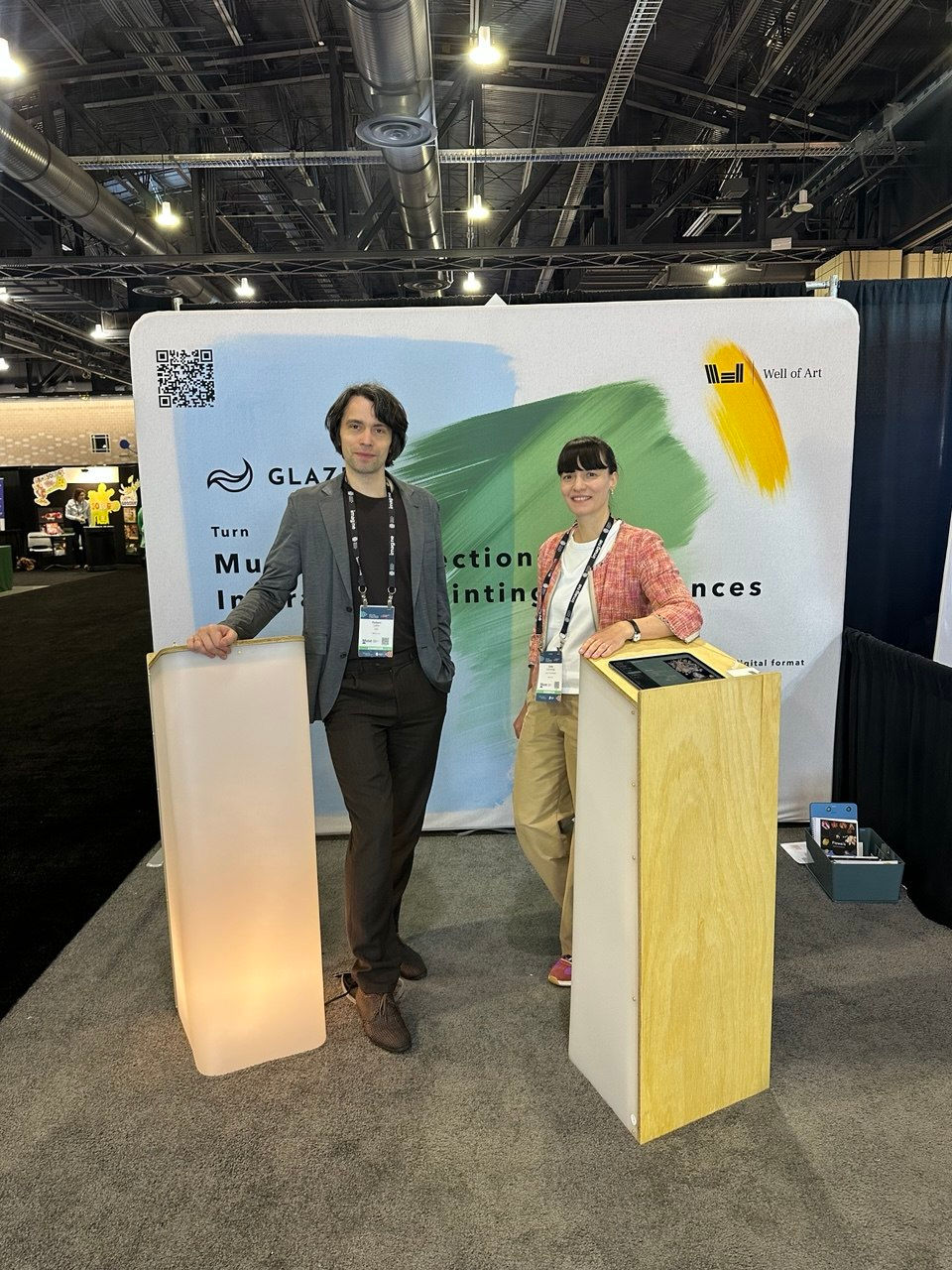
Among the many technologies competing for visitor attention, Well of Art and its platform Glaze.art offered a strikingly different proposition. Instead of accelerating consumption, the platform is designed around artistic practice, observation, and learning. Glaze.art connects artworks, painting techniques, and creative exploration through a digital environment intended to encourage sustained engagement. According to the company’s philosophy, the platform prioritizes quality, reflection, and artistic development.
This approach is particularly relevant for museums because it aligns digital engagement with one of the sector’s core values: careful looking. In a landscape increasingly dominated by rapid consumption, tools that encourage deeper observation may become just as important as those that increase interaction.


